Pages

Showing posts with label reflection. Show all posts

Wednesday, March 12, 2014

[Guest Post] Authenticity of Modern Pop Music - Words by Issac Purton of EmpireXL

I know things have been quiet lately. I'm currently in Colombia taking a much needed trip away from DC life. As much as I love this city, the pressure to escape has been escalating. Because I'll be gone for a week and work has kept me extra busy, I've reached out to a few friends to see if they'd like to guest post here. 

My undergrad friend and former roommate, Issac Purton, was happy to oblige. His blog, EmpireXL, is an exploration of music and creativity. His guest post is a critical and clever reflection of the authenticity of modern pop and the implications on music now and in the future. Enjoy! 

***

If there’s a problem with modern pop (and that’s a big if, mind you) it’s not that no one writes their own songs anymore. The idea of authenticity, and the lack thereof, gets batted around by people in thick-framed eyeglasses as the determinant of what makes a song great. One’s experiences, the theory goes, fuels one’s writing, and makes the final product superior by virtue of it being ‘real’. This is why people dismissed Lana Del Rey when they found out her name was Elizabeth Grant, and why people, faces hazed by smoke, still listen to Robert Johnson’s 31 songs on vinyl. This ignores, of course, the fact that Ms. Grant probably wrote more of her material than Mr. Johnson did.

Authenticity is an artifact of delivery, not origin. Presidents aren’t hailed as great orators because of how well they write their speeches; I don’t think a single President in the last half-century has written a single word they’ve spoken in front of an audience. Similarly, the singers we respect most, Elvis & Sinatra, for example, never wrote a word or note of their own material. Hell, Paul Anka, of all people, is the one who wrote “My Way”, a song that people seem to hold as Sinatra’s spoken motto.

Most pop songs are written with the universal in mind. This is why so many of them revolve around love, be it young, puppy, or on sight: it’s a fair bet that everyone has been in love at least once, and that’s exactly who the target audience of pop music is: everyone. Pop music, in the corporate sense, is designed to appeal to the broadest group of people possible, which is why artifacts of music that organically (more-or-less) gained popularity get assimilated into it. It’s important to remember that Auto-Tune, as an audible effect, only got popular because an engineer screwed up the effects on a Cher song.

The thing about music being written about universals like love (or death/murder (country), heartbreak (blues, jazz), depression (blues), etc, etc) is that you don’t need to have written it to relate to and express it. Frank Sinatra didn’t need to write a whole album’s worth of songs about being miserable: instead, he could draw from a whole catalog of standards to construct the definitive heartbreak album, In The Wee Small Hours (an album beloved by Tom Waits, a hipster idol if there ever was one). The question of who wrote a song like “What Is This Thing Called Love?” is an issue for trivia enthusiasts and accountants only; it has no relevance whatsoever on the quality of the piece itself.

This applies to music in a broader sense as well. If a song is truly well written and able to communicate its emotion or sensation of choice, it follows that someone else can pick it up and make it their own. The content of the song can trump the performer (as is often the case with “Hallelujah”, which sounds beautiful in almost any context) or the performer can change a song completely, and bring something new out of it. A performer can elevate a song, and a song can elevate the performer. This doesn’t have anything to do with authenticity: it has to do with what’s written and who’s speaking.

My go to for this point is to look at the music of The Band. I can’t stand most of their performances (due mainly to the obnoxious production), but performances like this one prove that there’s something there, beyond the production and, maybe, even the performance itself. A song can have a life of its own, and in that context it doesn’t matter what its origin was, or whether the original writer was heartbroken, half-in-the-bag, bleeding out from the chest, or whatever. What matters is what’s written.

In the consideration of modern pop, the problem is not that modern stars aren’t writing their own material, or even that they aren’t making it their own. Quite simply, it’s that the singers aren’t really the focus any more. They’re the performers, sure, but the publicity that surrounds them is usually more significant than their concerts. The real stars these days are the producers. They’re the core musicians, and they’re the source of the main divide between singer and audience in modern pop: Auto-Tune.

Auto-Tune was the unstated dream of every producer, manager, and engineer in the world before its invention, and now that it exists you’ll never hear a truly human voice in the Pop Top 10 ever again. The brilliant producers labels have at their disposal have achieved the dream of turning even the human voice into a synthesizable instrument, something that doesn’t rely on the caprice of a performer and whether they’re on the right combination of uppers and downers for the day. It’s a fantasy world where the singer only has to be in the studio for half-an-hour, at most, before the work of finalizing one’s masterpiece can begin. If vocoders weren’t so comical I’m sure labels would have washed their hands of pop stars decades ago (Casablanca probably tried).

A lack of authenticity, of a certain tragic origin story, isn’t the problem with modern pop. That’s been the state of affairs since pop music got its start in the 1950s and things were doing just fine. The problem we’re facing now is a lack of humanity, where the worst part of electronica (the vocals) got mixed with hip-hop’s emphasis on the producer/DJ as a major part of a performance.

This is not to say that Auto-Tune can’t be used well; it can, and can even, like a guitar pedal, express emotion in a way that’s unfamiliar and exciting. As an audible effect it’s no more horrific than something like ADT. The problem is when it’s used to smooth a vocal performance into an uncanny territory that’s almost, but not quite, entirely inhuman. The problem is when it gets used in country music, basically.

This is, of course, assuming there’s a problem with modern pop music at all. It’s not like previous decades of music didn’t see plenty of chaff rise into the Top 10 of the charts. The difference between then and now, quite possibly, is simple perspective. The bad music was forgotten, and the good lived forever. The same will likely be true 20 years from now, with the mediocre being cast into the margins of history and the brilliant living on in our classic rock radio stations (or Spotify playlists, whatever).

Or maybe the next wave of music will be so bizarrely alien to us that we’ll rush to Miley Cyrus’s side, apology in hand and tears in our eyes. If you thought Imagine Dragons was irritating, imagine what your children will be showing you.

Tuesday, December 31, 2013

Onwards to 2014

Oh, 2013.

You were the year. In the past three hundred and sixty or so days I: learned what it was like to love and lose 10x faster than normal, subsequently met the best friends I could ask for out east, played so many board games, moved to U Street/ Columbia Heights in an amazing apartment, bought a Fiat for my birthday, started this silly blog, lived summer to the absolute fullest, slept around, kicked ass at work, gained my favorite client, traveled a bit, missed family, went to a few shows, got more serious about thrifting, started running again, learned how to cook a few dishes… My mantra for 2014 is:

 DREAM BIG

What does 2014 have in store? I want to see as many shows as I have the time, energy and funds to do so. This means: Damien Jurado, Sylvan Esso, San Fermin, Water Liars, Ron Pope and Typhoon to start off the Winter/ Early Spring concert season. Four of these are at DC9. I'm prepared to establish residency there. This might also mean seeing Swear and Shake and Vikesh Kapoor. In addition, I want 2014 to be the year where I dive straight into local music, see more bands play at bars and start attending more house shows. I need friends who are as into this as I am, apparently.

Continuing with music goals, I want to fix my record player (or find one that works), buy more vinyl, and support more smaller artists on bandcamp. This will be the year of mix cd/ spotify playlist trades. For the blog, I've kept District of Folk going for six months now already. I will start queuing posts, hopefully adhering to a more consistent schedule, but will avoid having filler entries or posting music I am not wildly passionate about. I want to grow and hone in on the local folk, while forging relationships with artists.

I am very much looking forward to my first trip abroad in March! Two friends and I are heading to MedellĂ­n and Bogota, Colombia for a week. Other travel plans include Seattle to visit friends and family back home, possibly Myrtle Beach for more spring break plans, Philadelphia for work training and hopefully Newport again for the Newport Folk Festival. It's time to see more of the world.

Promotion at work is a possibility this year and I'm prepared to fight for it. If I truly intend on accomplishing everything I am setting out to do, I need to be more organized and more efficient. With a little better planning, I can do it all. For health, I will start my insulin pump in January and will continue running. I'm not sure if I have any big race goals this year, but my coworkers are starting to discuss running a Ragnar together in October. I also want to continuing learning how to cook and eat more clean.

With relationships, I want to be a better friend, girlfriend, daughter and sister. I will stay in touch with my friends back home more. I will take steps to repair the strained relationship with my sister. I will fly home and visit people. I also want to cultivate the friend group I have in DC and learn how to have long term friendships as an adult. It's going to be a beautiful year.

Remember, DREAM BIG is the mantra. My thoughts on 2014 are wildly ambitious but I wouldn't have it any other way.

Sunday, September 29, 2013

Typhoon and grappling with mortality while living with a chronic illness


(Disclaimer: White Lighter was released over a month ago, on August 20th, but was available to stream two weeks before then. Given that time frame, it has taken me almost two months to write this emotionally-entangled post. I'm still not certain I've done their music the justice it deserves. However, I'm seeing Typhoon live on Wednesday at Rock and Roll Hotel and getting this entry published was a "now or never" feeling". It's overly personal and raw but honest.)

I'm certain this goes without saying -- music has always been one of the biggest emotionally-complex components of my life. A song can be akin to a drug: a stimulant to heighten my feelings in the best of times, a depressant to bring me back down to reality in my more manic-induced moments, or an analgesic to shut down everyone and everything. Most days, I operate with a soundtrack playing in the background.

Kyle Morton, of Typhoon, has managed to write the soundtrack to my most probable "possible death": an ultimate and slow, painful demise from diabetic complications. I never tried or wanted a soundtrack for this facet of my possible future, but with Typhoon, I allowed it.

My mother had crippling depression but I watched her earnestly embrace life, in a way I had never seen, after she lost most of her eyesight and went on dialysis, after also suffering from diabetic complications. Yet, somehow, her own daughter, without any mental illness and an insatiably passion for life, has spent the past seven years living life to the absolute fullest under the impression that life will be over the minute she gets hit with a complication. The past few years have been this surreal whirlwind of adventures, love, connections, and joy. However, I haven't really envisioned a life for myself into my thirties. Every doctor appointment is a harrowing, nerve-wracking experience. Every bad bloodsugar level is a moment of heart-stopping regret. The fundamental part of living with a chronic illness boils down to these panic moments and the anxiety-filled late nights. I have a hard time not letting this define who I am. 

I often ask myself questions.
Is today the tipping point? Is today the day everything changes? 

I discovered A New Kind of House and I couldn't stop listening. Summer Home pulled me in and shook my core. Within the first few lines Morton talks of never wanting to give up but having a body that does. He's holding out for the summer, this promise-land, where the days will be back to normal or over. This was the first wake up call. I can't be the person who doesn't fight. I can't be the person who pleads for the summer, as my days won't return to normal after the "tipping point" occurs. The idea of there ever being a "normal" in the first place is delusional. My only summer, my only promise-land is the end.

There's Honest Truth and with the lines "On my time, oh Lord I've been so blind. But now I see the light below my doorjamb. Hallelujah, it will be gone soon", death almost seems glamorous for brief, fleeting moments. Be relieved that the end is here. However, it's not difficult to hear the regret laced throughout and it makes me hesitate. Claws Pt. 1 is damaging: "We are conceived all with the same chance/ to be spared, to be salvaged, to be kept safe/ then you hope to god nothing bad will happen/ from when you're born 'til you go quietly from old". For some of us, the bad happens, "the great great beast", sooner than we wish. The beast simultaneously claws, reminds us of our fate but also provides some solace, as we know what our fate will be.


 If A New Kind of House wasn't stark enough, I listened to Hunger & Thirst a few weeks after. Starting Over describes the common phenomenon among diabetics who "go off the bandwagon" and come back to desperately try to get their bloodsugars well-managed. I start over every single day, where "I've started a new beginning, suspiciously like the old one, only this time I'm ready". Even though I tell myself I'm ready, I never truly am.


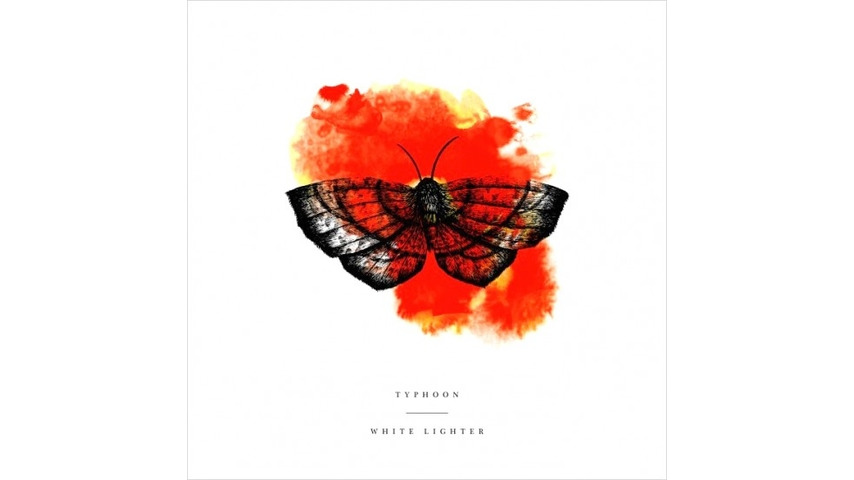
Typhoon's latest release, White Lighter, transcended all of my high expectations. On the aural front, it's pure, unadulterated, witchcraft. Somehow, the band's twelve individuals sound simultaneously cohesive and entirely jarring together. If only one audio element was removed from this album, it would not have the grandeur it does now.

On the narrative front, Morton continues to explore life and mortality. I have read his insights, published back in June, many times now. It's impossible to be blinded to his brilliance and the wisdom he has gained throughout life while suffering from an illness. I initially never knew his back-story of his development of Lyme Disease while growing up. I was not surprised when I did find out. These words can only be woven together by someone who has experienced the path of gradual death, at a speed possibly faster than the average person.

Possible Deaths is two minutes of morbid bliss. If nothing else, this song reminds me that my notion that diabetes is my sure-fire end is pure folly, as "every star is a possible death".


The hardest part of White Lighter is grasping with love being introduced as a theme. I've always thought of Common Sentiments as the prelude to White Lighter, as thoughts fully flushed out in Prosthetic Love and Post Script creep up here as well. At the end of the day, there's the reality that "you are sleeping together, but you will die alone" Is there a point of exposing vulnerability when the inevitable end won't be any different? I'd like to believe so. I began to think of the end of the song mantra as my own because "I will be good though my body be broken" and someone surely will acknowledge that truth about me but won't give a damn at the same time.


However, never in my life have I had a song describe so acutely my own thoughts with letting go of stubborn independence, as with Prosthetic Love. I think it's how he describes growing attached and learning how to count on a partner, rather than his own fingers, that strikes a chord with me. Is "attachment" a word commonly described with that nervous period of "falling for someone"? Because, it's always the word I use that no one else seems to. Attachment is exhausting, scary and difficult for someone who has a chronic illness. With being so different than my peers growing up, but having a body that could fail me, I never felt right accepting outside help. It spiraled into this possibly-unhealthy streak of fierce independence, where I could only count on my own mind to save me from myself. Is it fair to subject a partner, or anyone else, to the suffering caused by a disease they don't even have? Morton realistically captures depending on and falling for someone else, despite all the misgivings, when you've never really been able to depend on your own body or would expect anyone else to.


If Common Sentiments is the prelude to Typhoon's love story, Post Script is the all-depressing, but tragically pragmatic finale. I'm almost willing to assert the song as the most beautiful and fitting album-ending song out there. No matter what, I can only love within the confines of my chronic illness. In Post Script, Morton describes how he'll do anything and everything to make sure his partner gets the love they deserve. The thoughtfulness cannot be returned. How can someone love the part of an individual that will eventually rip them away? His partner isn't obligated to love him unconditionally, as they would also have to love the disease that will be his downfall. Honestly, I find it fair if someone with a chronic disease will never experience unconditional love. It's the compromise we make for likely being the first to leave.